How Volunteers Make the Difference: From a London Marathon Runner's Perspective
Executive Summary
A Rosterfy team member reflects on running the London Marathon twice, and how looking back on the full weekend, not just race day, revealed the scale of volunteer coordination behind the event. The piece walks through the touchpoints an athlete experiences: the London Running Show at the ExCeL where volunteers handle bib pick up and kit collection, the journey from London Bridge to the start at Greenwich or Blackheath, being guided into the correct wave, on-course support at water stations, Lucozade stations, cheer points and medical tents, and the finish line experience where volunteers award medals and guide runners to bag pick up and medical support.
The piece highlights that the best volunteer coordination is invisible: runners only notice it when something goes wrong, which is why a well-run event rarely draws attention to the people making it happen. It closes on the idea that understanding the scale of this operation deepens rather than diminishes appreciation for the day, and that much of the athlete experience belongs to the volunteers who deliver it.
Introduction
Every year, thousands of runners take on the London Marathon, and the route itself is honestly beautiful, it takes you past some of the most iconic landmarks of the city. But if I’m being honest, what’s stuck with me more than the scenery is just how much has to go right behind the scenes to make the day happen, and looking back, just how many volunteers came together to be part of that bigger picture.
I myself have run the London Marathon twice, and it’s only really looking back on the whole weekend, not just the race itself, that I’ve properly clocked just how much goes into keeping 50,000 of us safe and looked after. And how much of that is people giving up their time for free.
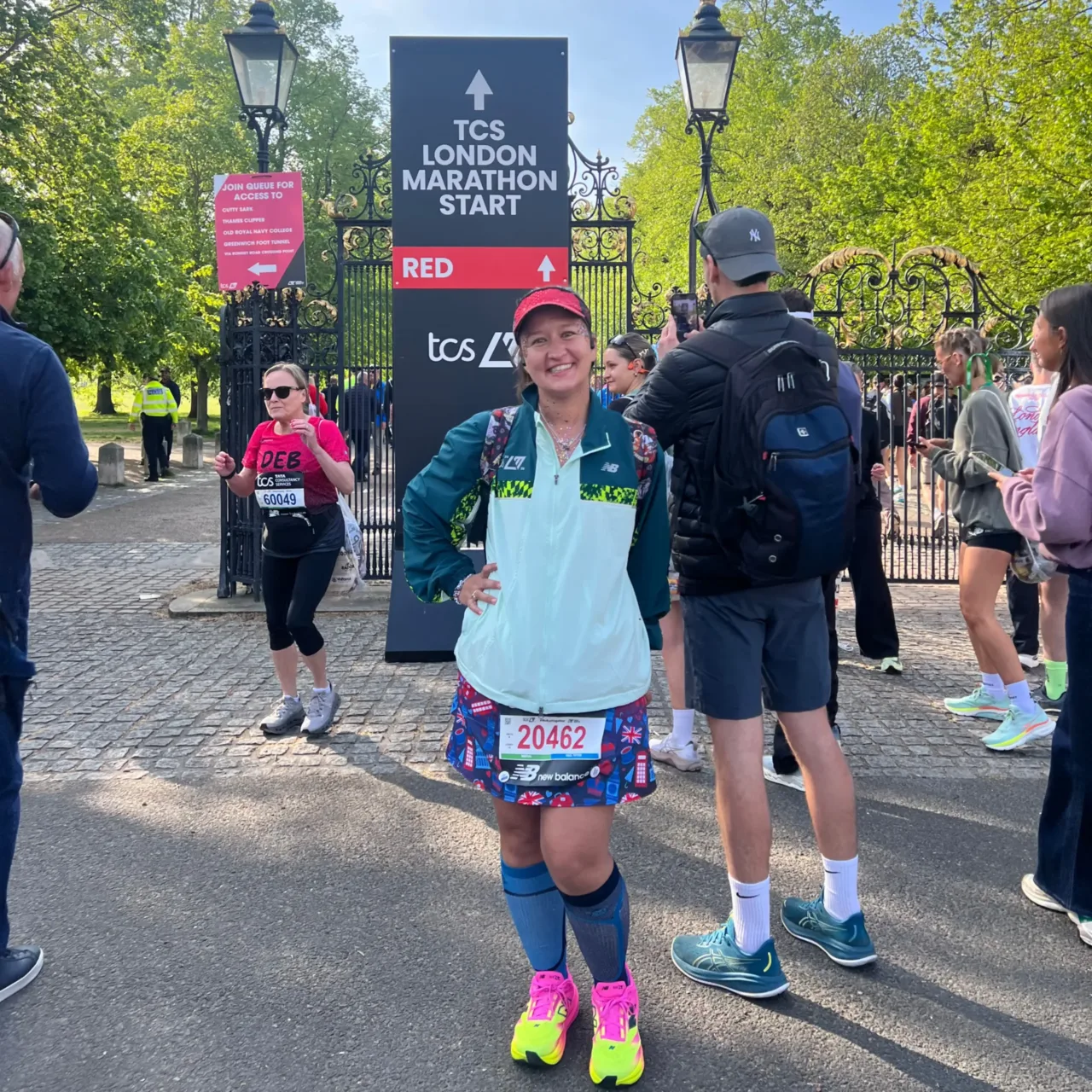
Shannon at the Greenwich starting area
The London Running Show
The race starts long before you’re anywhere near the start line. The London Running Show runs for four days at the ExCeL, and that’s where we go to collect your bib, grab our kit, wander round the sponsor stands. Not everyone working is a volunteer, but a lot of them are, handing out t-shirts, sorting out bib pick up, answering the same questions over and over from runners like myself, even pointing people from the train straight through to the right hall. I didn’t think much of it at the time, but looking back, that’s a huge amount of unpaid time going into something as simple as picking up a bib number and a finisher shirt.
Getting to the starting line
From London Bridge, we were guided to the right platform and train for our start point, Greenwich in my case this year, or Blackheath for others. Then once you’re there, there’s staff and volunteers everywhere pointing you towards the starting area and bag drop, showing you where to go, generally keeping a very nervous, yet very excited, very large crowd of people moving in the right direction. None of it feels like a big deal at the moment, you’re too busy thinking about nerves and sorting out our last bits, but it’s another thing that has to work perfectly for tens of thousands of people to end up where they’re meant to be.
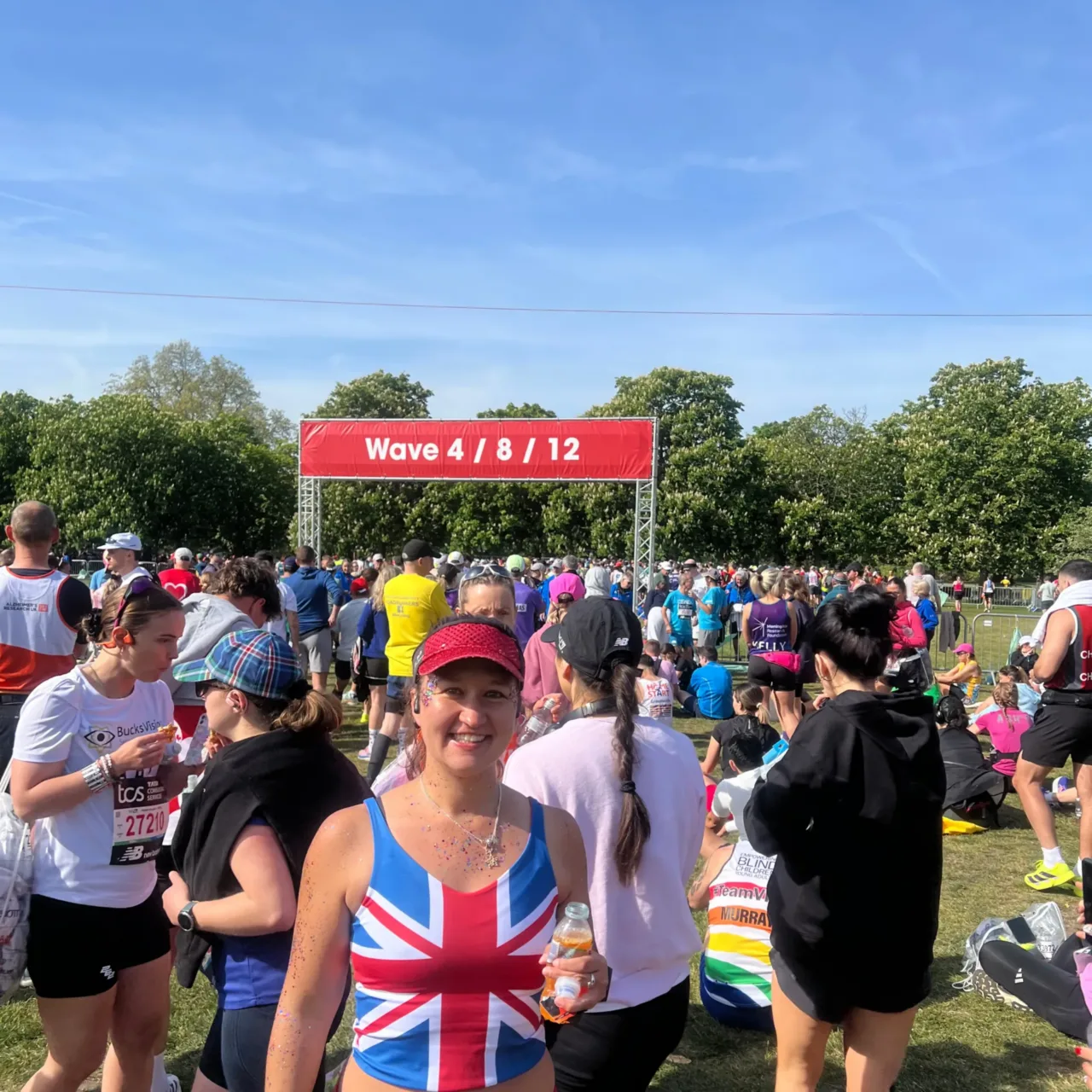
Shannon in front of her wave at the Greenwich start area
From wave to start line
Getting several runners into their right wave, at the right time, is definitely its own operation. Volunteers check you’re in the right wave, keep things moving, and guide you up to the start line safely, so everyone ends up where they should be. At the time it just feels calm, everything moving in perfect motion. It’s only afterwards that I’ve realised how much work goes into making tens of thousands of nervous and excited people feel like everything’s running smoothly as we approach the start line, ready for our wave to go.
The touchpoints along the 26.2 miles
Once you’re running, the whole course is lined with support, water stations, Lucozade stations, cheer points, medical tents, mile after mile, all the way to the end. You don’t really think about it until you need it, and then suddenly that cup of water or that noise from a cheer section is exactly what gets you through the next mile. That’s especially true around mile 20, when most people hit a wall. It’s not the route that gets you through that bit, it’s a marshal shouting your name off your bib, or some stranger at the side clapping you on. It turns something really private and painful into something that feels shared. And it doesn’t stop once you’re past the worst of it either, the same water stations and cheer points and medical support carry you the rest of the way, just as much as they did in the first twenty miles.
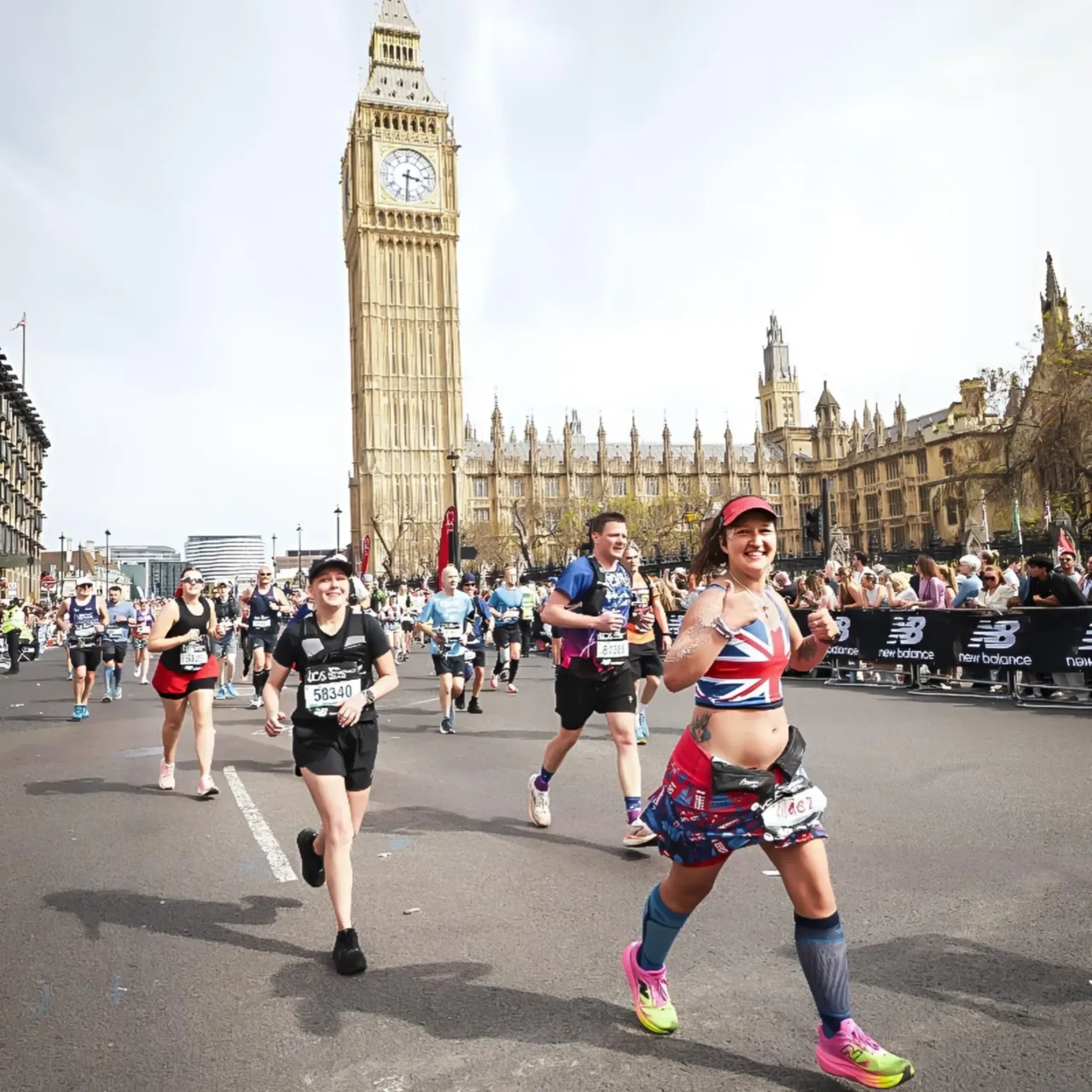
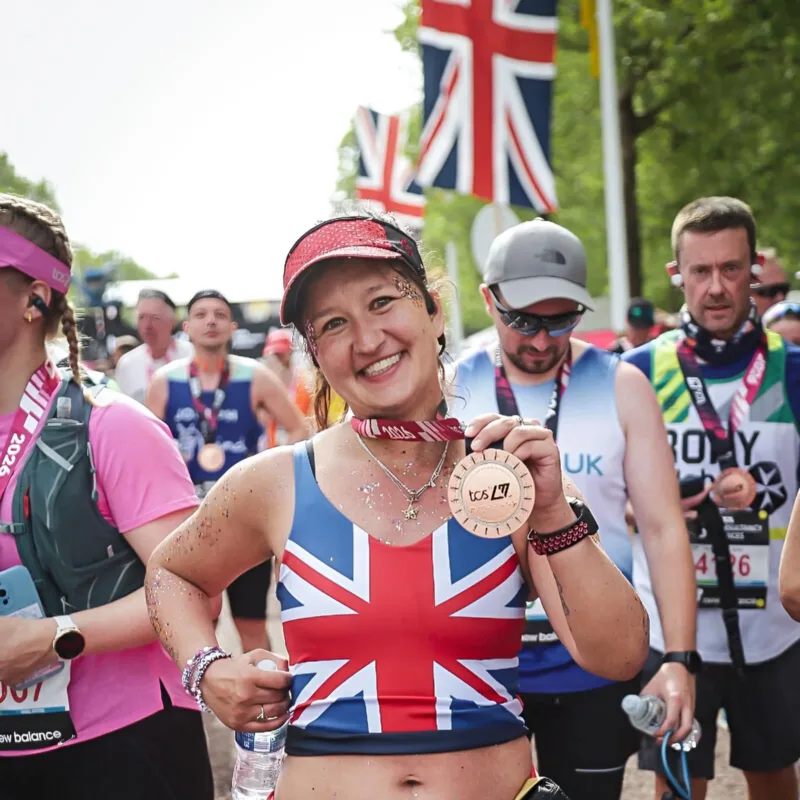
Shannon in Mile 25 of the 2026 London Marathon
Crossing the finish line, and everything after it
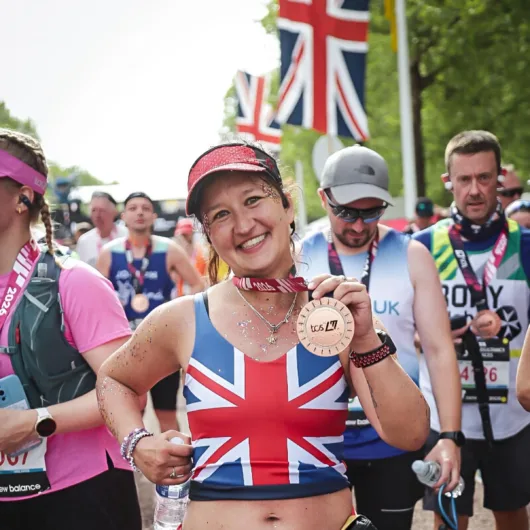
Crossing the line is the bit everyone pictures, but it’s often the people just past it who matter more, catching anyone whose legs finally give way, congratulating you as they place the medal round your neck, and keeping an eye out for you in the minutes when you’re too caught up in the moment to notice how you’re really doing. And it doesn’t stop there either, there’s still people guiding you through the finisher area, pointing you towards bag pick up, medical if you need it, and on to the event area for runners. Having that many people still looking out for you after everything we have just put our bodies through can make even the toughest runner feel pretty emotional.
The best coordination is invisible
Most of what makes the day work is invisible if it’s done well. You only really notice it when something goes wrong, which is exactly why it usually doesn’t. Every bit that runs smoothly, from the expo to the medal, is down to someone else’s shift that you never see.
Having now done the London Marathon twice now, the course hasn’t changed and it’s still just as iconic the second time round. What’s changed is my knowledge of just how many people give up their time to make the day what it is, and just how big an operation it takes to pull off safely for every single runner on the course. It hasn’t taken anything away from the day, if anything it’s added to it. Knowing what’s actually behind it makes me appreciate it more, and makes it pretty clear how much of the experience belongs to the volunteers who show up to make it happen.
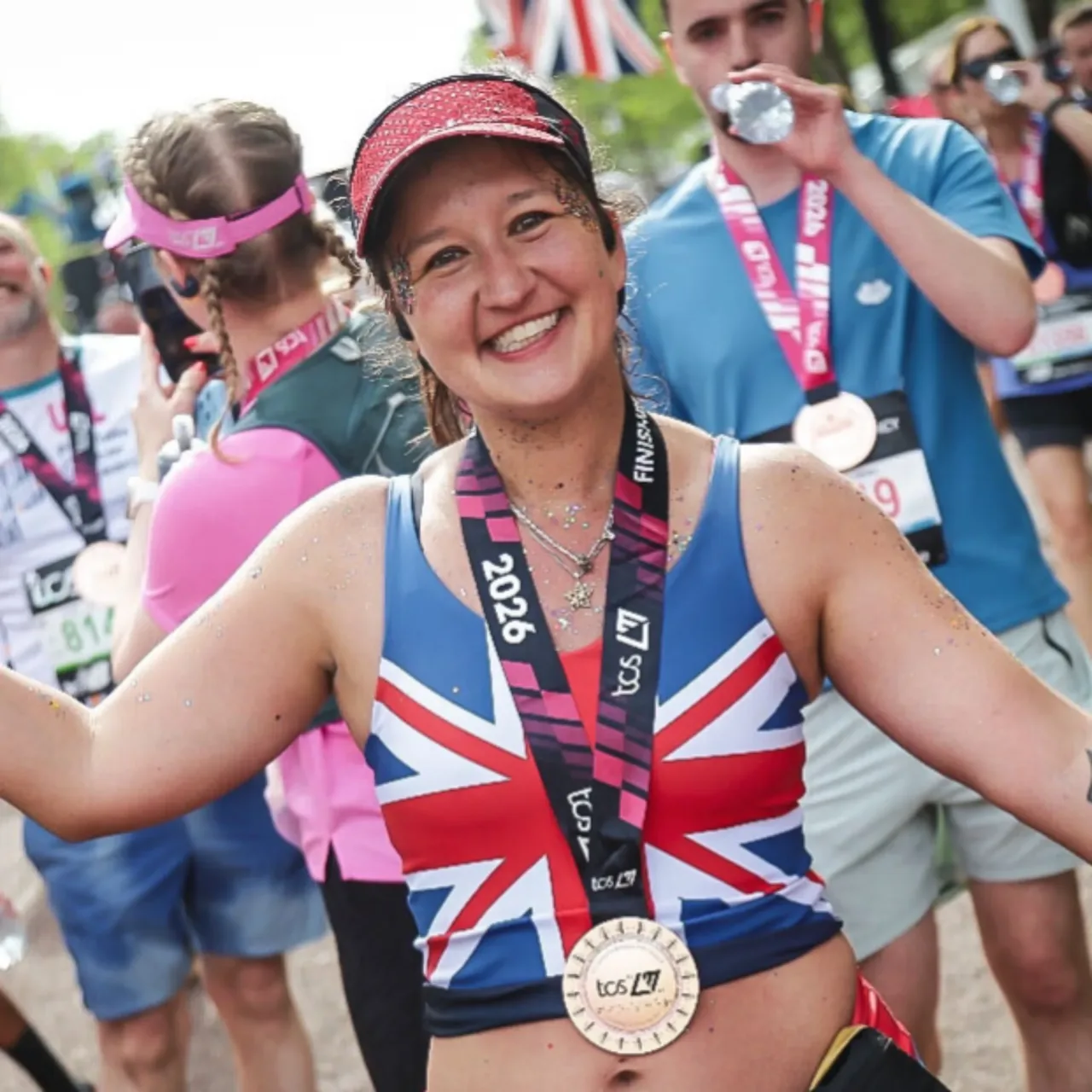
Shannon receiving her 2026 London Marathon medal
Le Champion: Powering volunteer-led sporting events across the Netherlands
Discover how Le Champion has transformed its volunteer management with Rosterfy, creating a more efficient, data-driven, and streamlined event experience for runners and organisers alike.






REQUEST A DEMO
Unlock the potential of your volunteer programme
Book a short discovery call with our team to learn how Rosterfy can help you better connect with, manage, and inspire your volunteers.