
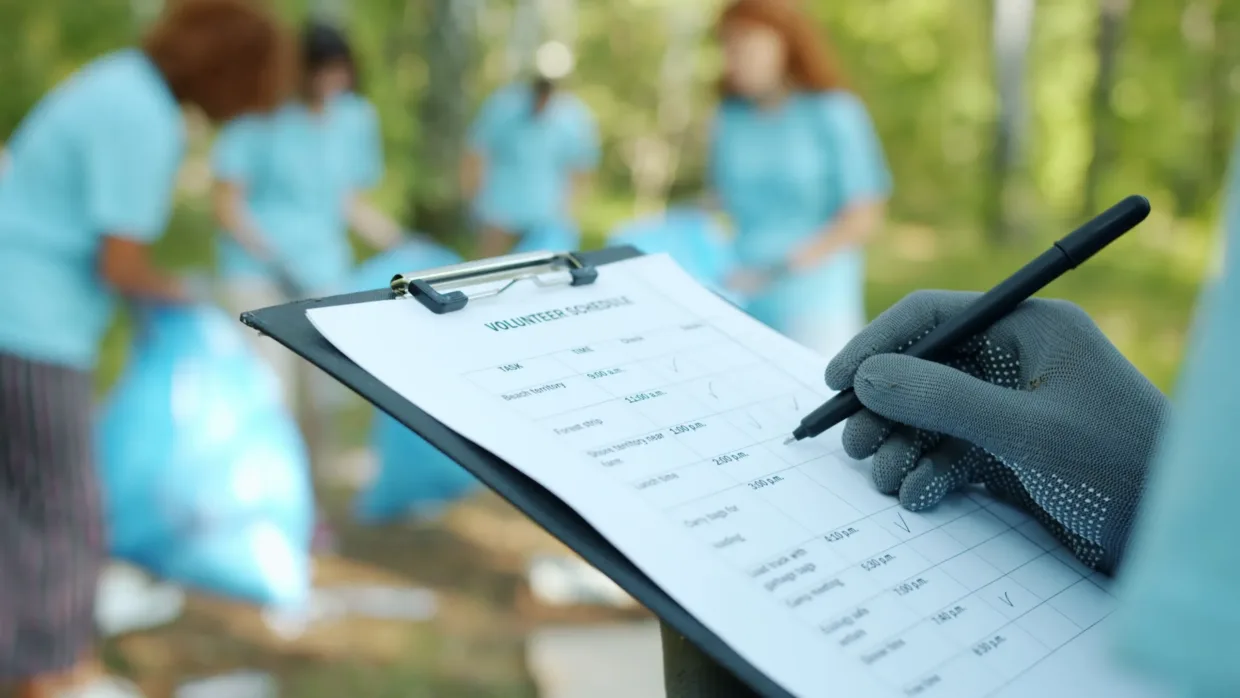
Preparing your volunteer program for changes to food security support

According to the U.K. government’s Community and Engagement Survey 2025/26, England’s volunteering rates rose for the third consecutive year, but the story is slow, steady recovery rather than a breakthrough. Monthly formal volunteering reached 18% (up from 17%), informal volunteering reached 25% (up from 24%), and combined participation reached 35% (up from 33%), still short of the 23% pre-Covid rate. Charitable giving held flat at 66%. Demographic gaps haven’t narrowed, and the biggest barrier remains time, not interest, keeping flexible volunteering firmly on the agenda.
| Measure | 2025/26 | 2024/25 | Pre-Covid |
|---|---|---|---|
| Formal volunteering (monthly) | 18% | 17% | 23% |
| Informal volunteering (monthly) | 25% | 24% | n/a |
| Formal or informal (monthly) | 35% | 33% | n/a |
| Gave to charity (4 weeks) | 66% | 67% | 75% |
Source: Community and Engagement Survey 2025/26, DCMS, 14 August 2026.
Local variation is far wider than the national average suggests. Formal volunteering ranges from 7% in the City of London to 29% in Rushcliffe, a 23-point spread. The South West, South East and East of England run above average; London, the West Midlands and the North East run below it. For any multi-region organisation, the national figure hides where growth is actually happening.

Not really, and that’s worth flagging. Demographic gaps have persisted rather than narrowed. 25% of 65 to 74 year-olds volunteer formally at least monthly, compared with just 12% of 25 to 34 year-olds, roughly the same gap as previous years. Informal volunteering skews toward both younger and older groups; disabled people volunteer informally more than non-disabled people (29% vs 25%); and people in higher managerial and professional occupations continue to lead on both volunteering and giving
Motivation is values-led; the barrier is logistical, and it isn’t shifting.
Top reasons to volunteer: wanting to help (51%), the cause mattering personally (31%), having spare time (30%).
Top barriers: work commitments, by a wide margin, cited by 51% of people who didn’t volunteer as much as they might have. Other uses of spare time (36%) and childcare (21%) follow well behind.
Work commitments have been the dominant barrier for several years running, not a one-off finding. That consistency is exactly why flexible, low-commitment volunteering options remain the practical route to converting willing people into active volunteers
Barely. 66% gave to charity in the last four weeks, down 1 percentage point from 67%, continuing a plateau since 2021/22, still well below the 75% seen pre-2020.
The headline for 2025/26 is continuity, not a breakthrough: volunteering is recovering slowly, demographic gaps persist, and time remains the barrier it has always been. That argues for two practical priorities: visibility into where local recovery is happening, and flexible, low-friction ways for time-poor people to get involved.
If you’re working through that operationally, Rosterfy’s team can help.
What share of people in England volunteer? 35% took part in formal or informal volunteering at least once a month in 2025/26.
Has volunteering recovered to pre-pandemic levels? Not fully. Formal volunteering was 23% before the pandemic and stands at 18% now, up from 17% last year.
What’s the biggest barrier to volunteering? Work commitments, cited by 51% of people who didn’t volunteer as much as they might have, well ahead of any other reason.
This article is for general information and doesn’t constitute legal advice. For a specific role’s eligibility, check the DBS eligibility tool or your organisation’s safeguarding lead.


Book a short discovery call with our team to learn how Rosterfy can help you deliver more support to your community and feed more families