

In brief
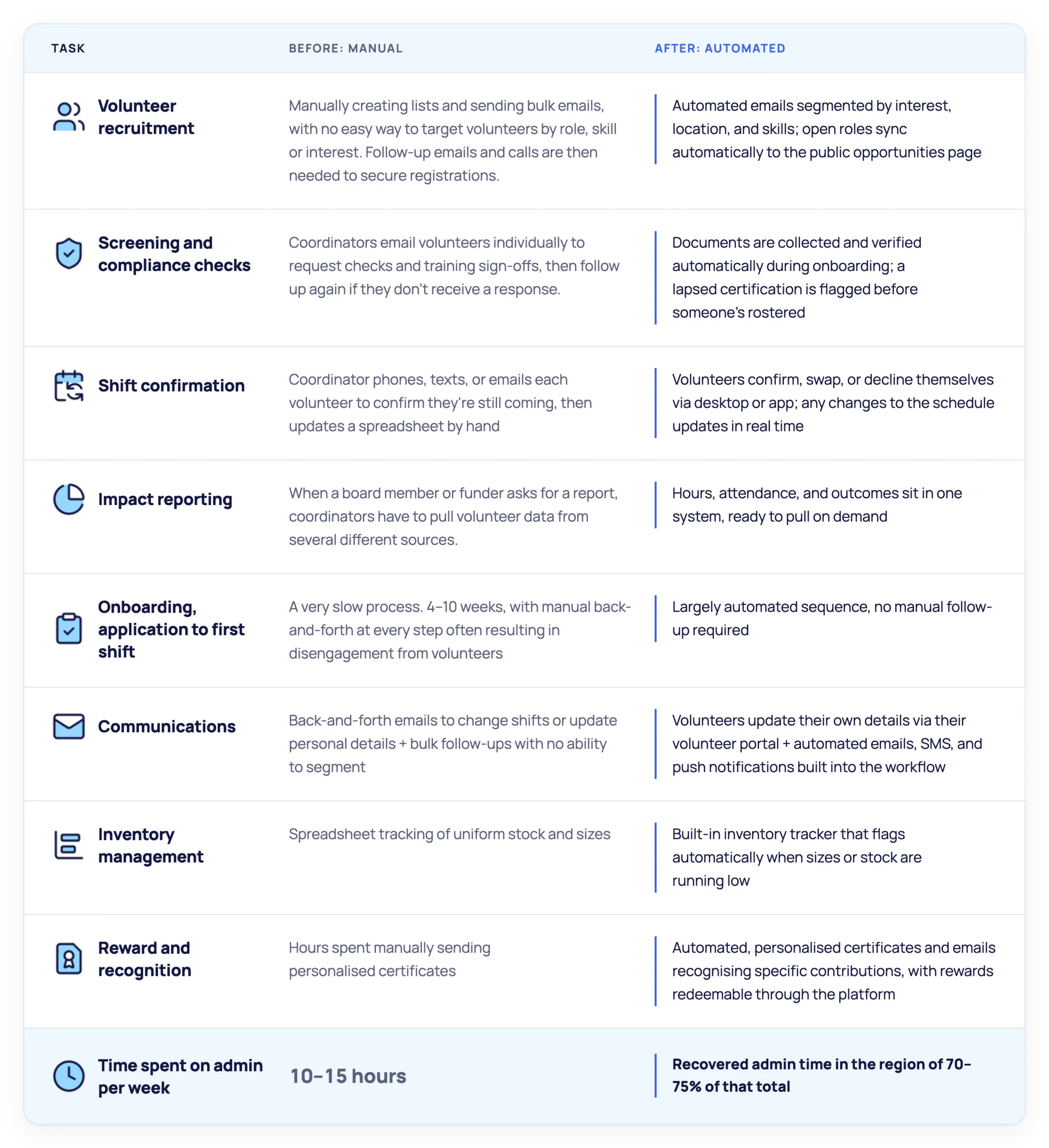
- Coordinators managing 200+ volunteers can spend 10–15 hours a week on tasks like chasing compliance documents, confirming shifts and creating impact reports.
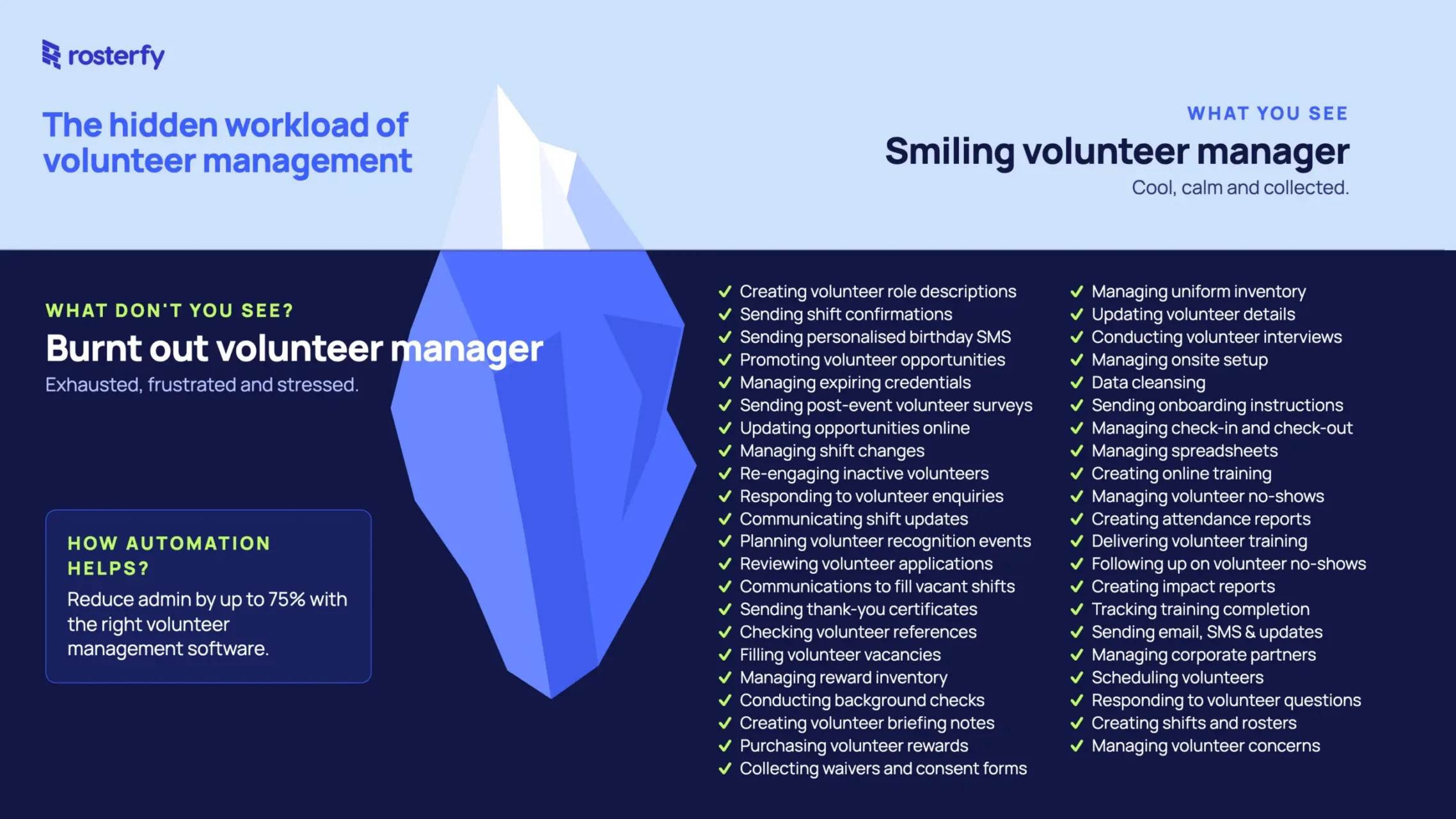
- Automation can save teams significant time. British Heart Foundation cut admin by around 50%, while other organisations have reduced workloads by 70–75%.
- Onboarding that once took 4–10 weeks can be largely automated, taking volunteers from application to their first shift with minimal manual follow-up.
It’s Monday morning. There are 40 new applications in the inbox, 12 compliance documents to check and a shift spreadsheet that hasn’t been updated since Thursday. By the time you’re all caught up, it’s Wednesday, and Monday’s applications still haven’t moved. For most volunteer coordinators managing volunteers, that’s not a bad week. It’s an average one.
What does a volunteer coordinator's week look like before and after automation?
How much time do volunteer coordinators actually spend on admin each week?
Most coordinators managing 200+ volunteers spend 10 to 15 hours a week on admin rather than programme work. That time goes on three recurring tasks: chasing compliance documents, manually confirming shifts, and rebuilding impact reports from scratch. None of it scales down as the volunteer base grows, it scales up.
The three tasks, in practice:
- Chasing compliance documents.Following up on checks and training one email at a time, often with more reminders needed when volunteers don’t respond.
- Manually confirming shifts. Phoning, texting, or emailing volunteers to check they’re still coming, then updating a spreadsheet by hand when they’re not.
- Rebuilding impact reports. Pulling volunteer data from several places whenever a board member or funder asks for an update.

How do you manage 500+ volunteers without spreadsheets?
Managing 500+ volunteers means moving away from spreadsheets or basic volunteer management software and automating key tasks like compliance, shift confirmations and impact reporting. Instead of one coordinator managing everything, the platform automatically tracks documents, schedules and hours, removing the need to manage everything through inboxes and spreadsheets.
In practice, that looks like:
- Compliance runs itself. Documents are collected and checked during onboarding, with expired certifications flagged before a volunteer is scheduled.
- Shifts confirm themselves. Volunteers confirm, swap, or decline through a self-serve app, and the schedule updates in real time, no phone calls required.
- Impact reporting is live, not reconstructed. Hours, attendance and outcomes are stored in one system, making it easy to create board or funder reports when needed.
Why do volunteer programmes end up running on spreadsheets in the first place?
Most organisations don’t set out to run volunteer coordination on spreadsheets. The need for change often comes when volunteer growth outpaces your current systems and processes. A merger, new programme or surge in applications can quickly expose the limits of the tools you already use.
What results have organisations seen from automating volunteer admin?
Organisations that automate onboarding and compliance tracking have recovered most of a coordinator’s admin week. British Heart Foundation cut volunteer admin by around 50% through automation. Other organisations have reduced manual workloads by as much as 70–75%.

Case Study: British Heart Foundation
British Heart Foundation used Rosterfy to cut volunteer onboarding from 42 to 21 days and save £200,000 a year. They also increased the number of volunteers taking on multiple roles by 125%.
What does best-practice volunteer onboarding look like at scale?
How does automation change volunteer recruitment?
Automating volunteer recruitment replaces manual list-pulling and generic bulk emails. Target volunteers based on their interests, location, and skills. Open roles are automatically added to a public opportunities page, where volunteers can find and apply for roles that suit them.
- Segmented, not bulk. Outreach targets volunteers by interest, location, and skill rather than sending one generic email to everyone on the list.
- Self-service discovery. Roles sync automatically to a public opportunities page, so recruitment isn’t purely outbound and manual.
- Group management. Make it easy for community groups to recruit and manage volunteers with personalised invitations and simple group coordination.

Gold Standard: Volunteer Recruitment | Guide Dogs NSW/ACT
Guide Dogs NSW/ACT makes it easy for volunteers to explore available roles through a dedicated opportunities page before they register. By providing clear, accessible information upfront, prospective volunteers can easily find opportunities that match their interests, leading to stronger engagement and higher-quality applications.
How does automation change volunteer communications?
Automated communications let volunteers update their own shift and contact details, reducing admin for coordinators. Automated emails, SMS and push notifications make it easy to send relevant messages to the right volunteers at the right time.
- Self-service updates. Volunteers change their own shifts and details, cutting the back-and-forth that used to sit with the coordinator.
- Built-in, segmented messaging. Automated emails, SMS, and push notifications reach the right group, not the whole list every time.
How do organisations track volunteer uniforms and inventory without spreadsheets?
Some volunteer management platforms include built-in inventory management, eliminating the need for manual spreadsheets. Stock levels are tracked automatically, with alerts when supplies run low. This gives teams time to restock and make sure volunteers have what they need.
How can organisations automate volunteer reward and recognition?
Automating volunteer reward and recognition replaces hours spent manually sending personalised certificates with automatic certificates and emails that recognise a volunteer’s specific contribution. Volunteers can redeem rewards directly through the platform, making recognition a simple part of their experience while reducing admin for coordinators.
Are other organisations actually moving off spreadsheets, and what happened when they did?
Organisations across sport, health and food rescue have already made this move. The result is less admin and fewer manual tasks for coordinators. The specifics vary by organisation, but the pattern holds regardless of sector.
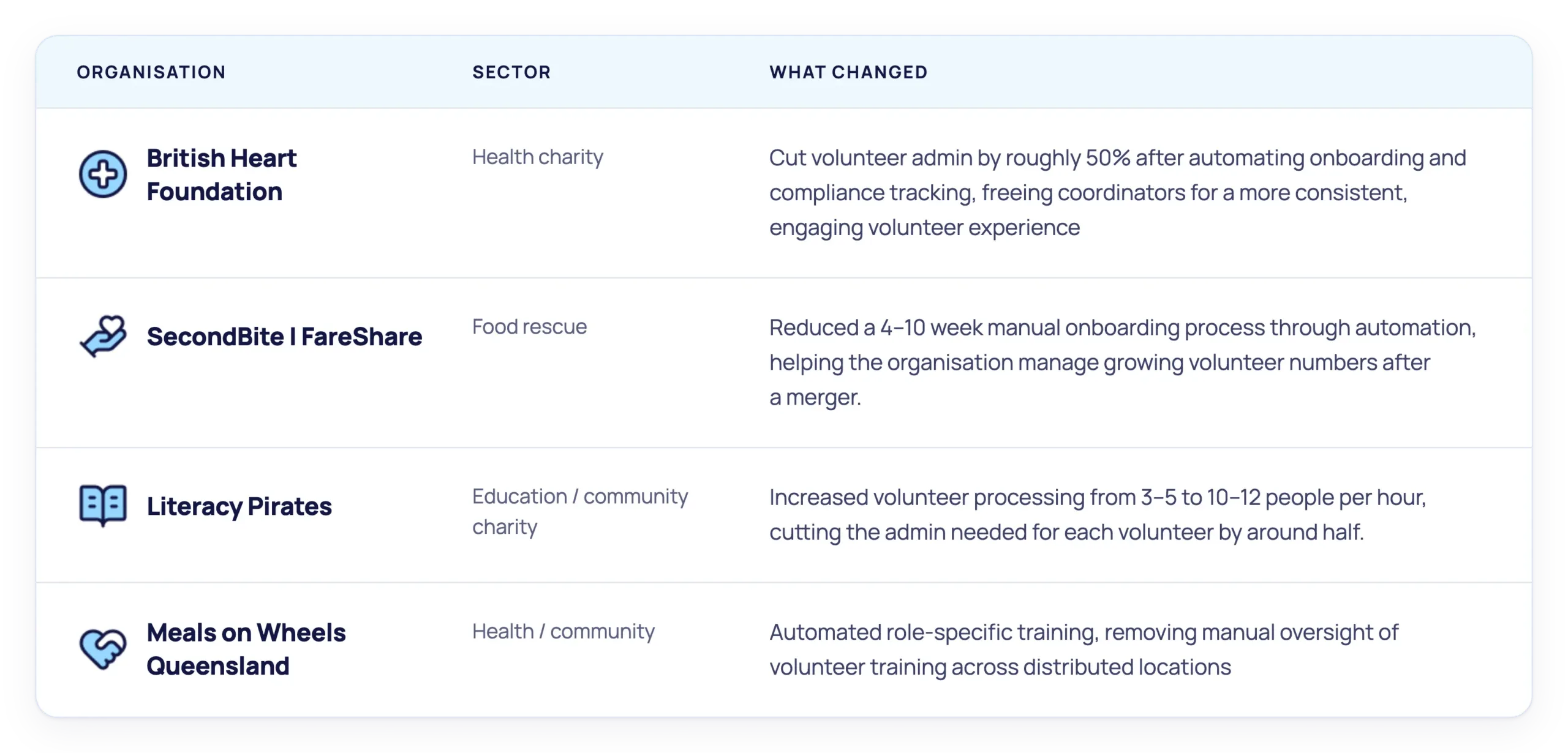
These aren’t isolated wins. The same three priorities appear in each case: faster onboarding, easier compliance tracking and less admin for coordinators.
Should you build or buy a volunteer management system?
Whether to build or buy a volunteer management system depends on what you’re actually solving for. Spreadsheets and scripts can work for smaller programmes. As you grow, managing compliance, multiple locations and reporting to boards or funders can quickly become more difficult. At that point, the real cost of building your own system is the ongoing maintenance. A dedicated platform already provides and supports these capabilities at scale.
White Paper: Build v Buy
“Should we buy this software or should we build it?”
We compare the pros and cons of building vs buying software to help you choose the right option for your organisation.
Where should you start?
If any part of the “before” week sounds familiar, start with an honest audit of where the hours are actually going, not a full platform evaluation. Once that’s visible, it’s a much easier conversation to have with a manager, a board, or a vendor.











REQUEST A DEMO
Unlock the potential of your volunteer programme
Book a short discovery call with our team to learn how Rosterfy can help you grow your volunteer community while supporting your team