Volunteers as Fundraisers: how volunteer and fundraising teams can work together to meet fundraising targets
Volunteers are one of the most under-counted fundraising assets an Australian charity has. They give more money than non-volunteers, they stay for years, and many are at the life stage when people write or update a will. Most charities still cannot see this value, because volunteer and fundraising data sit in separate systems run by separate teams. This paper argues that connecting the two, through shared planning, consent and integrated systems, is how charities turn volunteer goodwill into measurable, reportable income.
Key topics covered:
Volunteers are giving more time, not less.
Australians spent 618 million hours volunteering through organisations in 2025, up from 490 million in 2020, even as the formal volunteering rate held at 22.6%.[1]
Volunteers give more money.
Australians who volunteered and donated gave an average of $1,017 a year, nearly double the $537 given by donors who did not volunteer.[2]
Bequests are the biggest untapped prize.
Only about 6.5% of Australian wills include a charitable gift,[3] yet gifts in wills already make up around 24% of fundraising revenue for charities with an established gift-in-will program.[4] Long-serving, older volunteers are natural prospects.
The barrier is data, not willingness.
When volunteer and fundraising records are disconnected, charities cannot credit, steward or report volunteer-driven income. Connecting volunteer management software to the fundraising CRM closes that gap.
What does it mean for volunteers to be fundraisers?
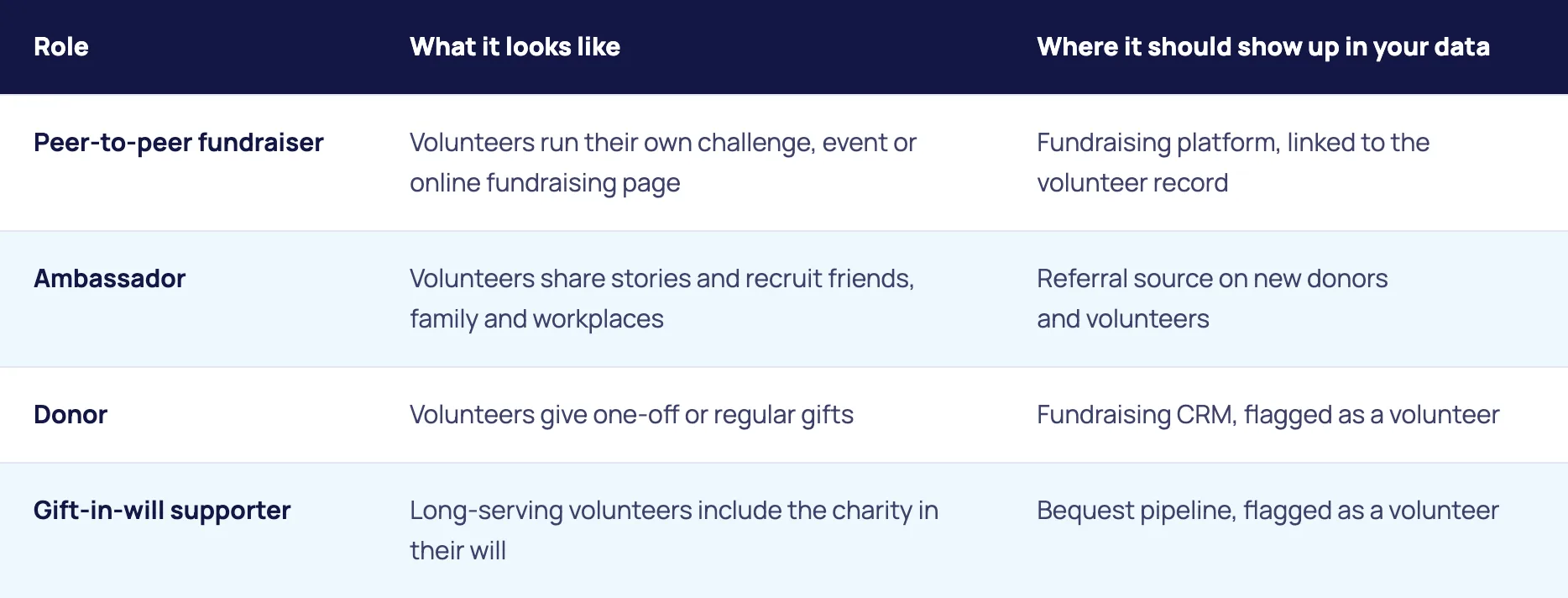
Volunteers act as fundraisers when they raise money for the cause, promote it to their networks, donate themselves or leave a gift in their will. For most charities, these four roles already exist informally. The opportunity is to recognise them, plan for them and record them, so volunteer-driven income is visible and repeatable.
Who volunteers in Australia in 2026?
About 9.5 million Australians, or 42.8% of people aged 15 and over, volunteered formally or informally in 2025. Around 5 million volunteered through an organisation. People aged 45 to 54 were the most likely to volunteer formally, and older volunteers contributed the most hours.[1]
- 28% of people aged 45 to 54 and 27.1% of people aged 35 to 44 volunteered formally, the highest rates of any age group.[1]
- 43.7% of volunteers aged 65 and over gave 100 or more hours a year.[1]
- 40.3% of formal volunteers had been volunteering for ten years or more.[1]
- 54.4% of volunteers paid their own expenses to volunteer, so many are already contributing money as well as time.[1]
These are the same people fundraising teams spend heavily to reach through cold acquisition: established, committed and connected to the cause.
Source 1: Volunteering Australia, General Social Survey 2025: at a glance fact sheet, May 2026, based on ABS General Social Survey 2025.
Do volunteers donate more than non-volunteers?
Yes. Australia’s largest study of giving found that people who volunteered and donated gave an average of $1,017 in a year, close to double the $537 given by donors who did not volunteer.[2] Volunteers already know the cause from the inside, which makes them warmer prospects than cold audiences.
Three things drive this:
- Proximity. Volunteers see the work first-hand, so the case for support needs no persuasion.
- Trust. A volunteer who has been treated well trusts the organisation with their money.
- Networks. A volunteer who asks friends and colleagues to give is a more credible messenger than an ad.
Source 2: Giving Australia 2016, Queensland University of Technology for the Department of Social Services, launch summary, December 2016.
Why are volunteers strong gift-in-will prospects?
Gifts in wills usually come from people with a long, personal connection to a charity, and long-serving volunteers fit that profile. Many have volunteered for over a decade and are at the age when people write or update wills. Yet only about 6.5% of Australian wills currently include a charitable gift.[3]
- Only about 1% of the value of Australian inheritances goes to charity, and an estimated $5.4 trillion will pass between generations over the next 20 years.[3]
- The average Australian gift in a will has been reported at around $60,000.[3]
- Among charities in the Include a Charity network, gifts in wills made up 24% of fundraising revenue, and bequest income rose 5.5% in FY2023.[4]
Estimate your own opportunity (illustrative, not a forecast). Multiply three of your own numbers: long-serving volunteers aged 55 and over, the share you could realistically expect to include you, and your average gift-in-will value. For example, 500 volunteers × 5% × $60,000 = $1.5 million in future bequest income.
Source 3: JBWere Bequest Report, 2024, as reported by NAB News and the Institute of Community Directors Australia.
Source 4: More Strategic gift-in-will benchmarking study with Include a Charity members, 2024, as reported by the Baker Heart and Diabetes Institute, August 2025.
Why do volunteer and fundraising teams work in silos?
Most charities built volunteer management and fundraising as separate functions with separate targets, budgets and systems. Volunteer teams focus on rostering, compliance and retention, while fundraising teams focus on donors and campaigns. Without shared data or planning, neither team can see when a volunteer is also a donor, fundraiser or bequest prospect.
The symptoms are familiar:
- Volunteers receive fundraising appeals in the middle of a busy volunteer drive, or none at all.
- Volunteers never gave consent to hear about fundraising, so the fundraising team cannot contact them.
- Donor reports leave out income volunteers raised or influenced, so their value goes unrecognised.
- Major gifts that started with a volunteering connection are credited to the wrong source.
Carl Young saw this first-hand at Peter MacCallum Cancer Centre: “One of the challenges was tracking their time and true value to the organisation.”
How can volunteer and fundraising teams work together?
Start with five practical steps: plan jointly at the start of each year, ask for fundraising consent when volunteers register, share one communications calendar, connect volunteer and fundraising systems, and recognise volunteers for the money they help raise. Each step is low cost and builds on processes most charities already run.
- Plan together each year. Hold a joint planning session between volunteer management and fundraising. Agree which campaigns volunteers will support, which volunteer segments fundraising will steward, and how results will be shared.
- Ask for consent at registration. Add a clear, optional consent to the volunteer registration form for receiving news about fundraising. Every message still needs an unsubscribe option, and consent wording should follow your privacy policy.
- Share one communications calendar. Fundraising teams should see when big volunteer drives are running, and hold appeals until volunteers have the headspace to engage.
- Connect your systems. Give volunteers one account for volunteering and fundraising, and sync volunteer records to the fundraising CRM so neither team double-handles data. Rosterfy integrates with CRMs including Blackbaud, processes payments through Stripe and lets volunteers start a GivenGain fundraising page from their volunteer portal.[6][8]
- Recognise volunteers as fundraisers. Soft-credit volunteers for income they raise or influence, share their stories in newsletters, and thank them personally. A letter from the CEO costs little and builds loyalty for years.
Source 6: Rosterfy, WaterAid customer story, updated March 2026.
Source 8: UK Fundraising, Rosterfy and GivenGain partnership.
How do you measure volunteer-driven fundraising?
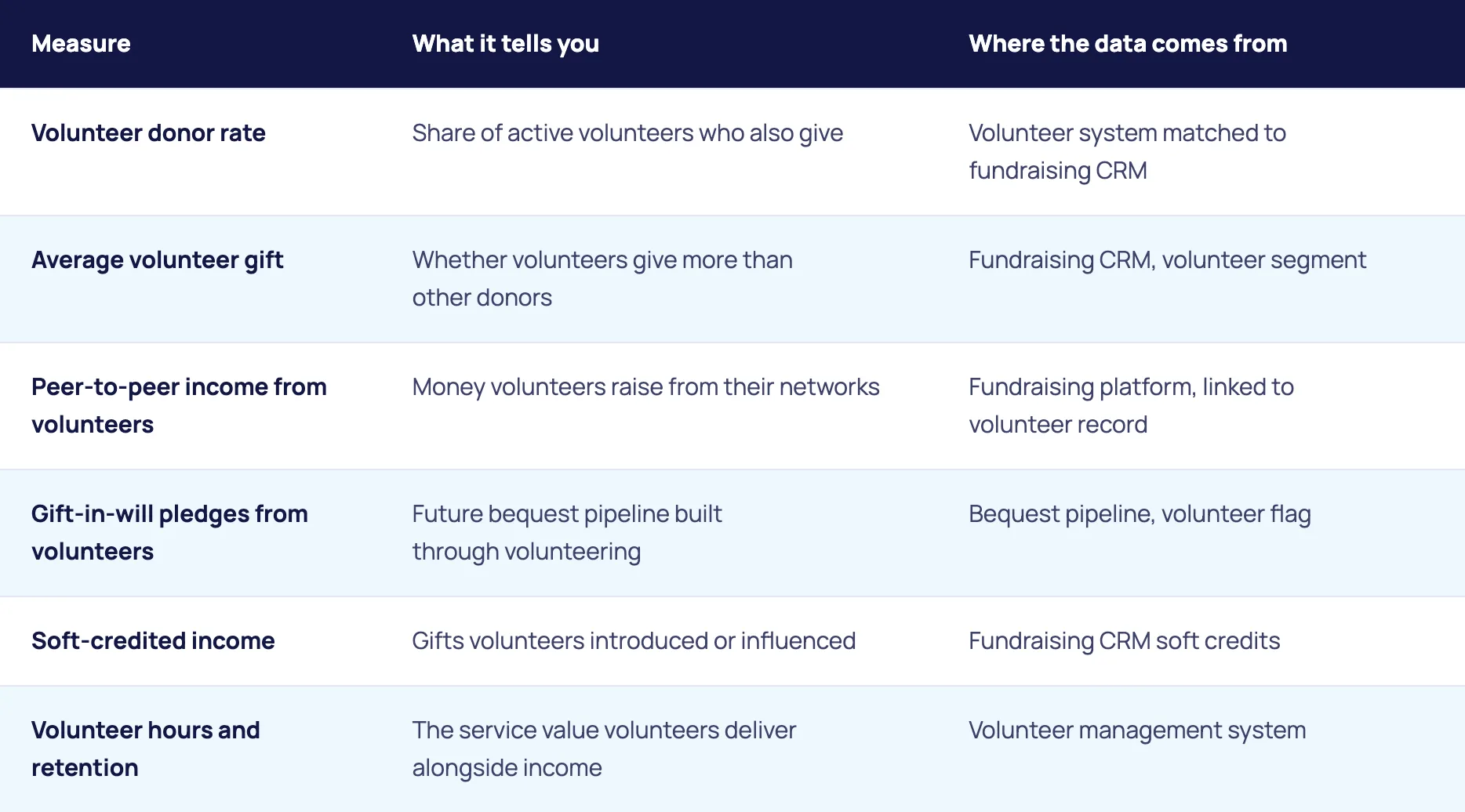
Track volunteers as a supporter segment in your fundraising CRM, then report on how much they give, raise and influence. The core measures are volunteer donor rate, average volunteer gift, peer-to-peer income raised by volunteers, gift-in-will pledges from volunteers, and soft-credited income from introductions and events.
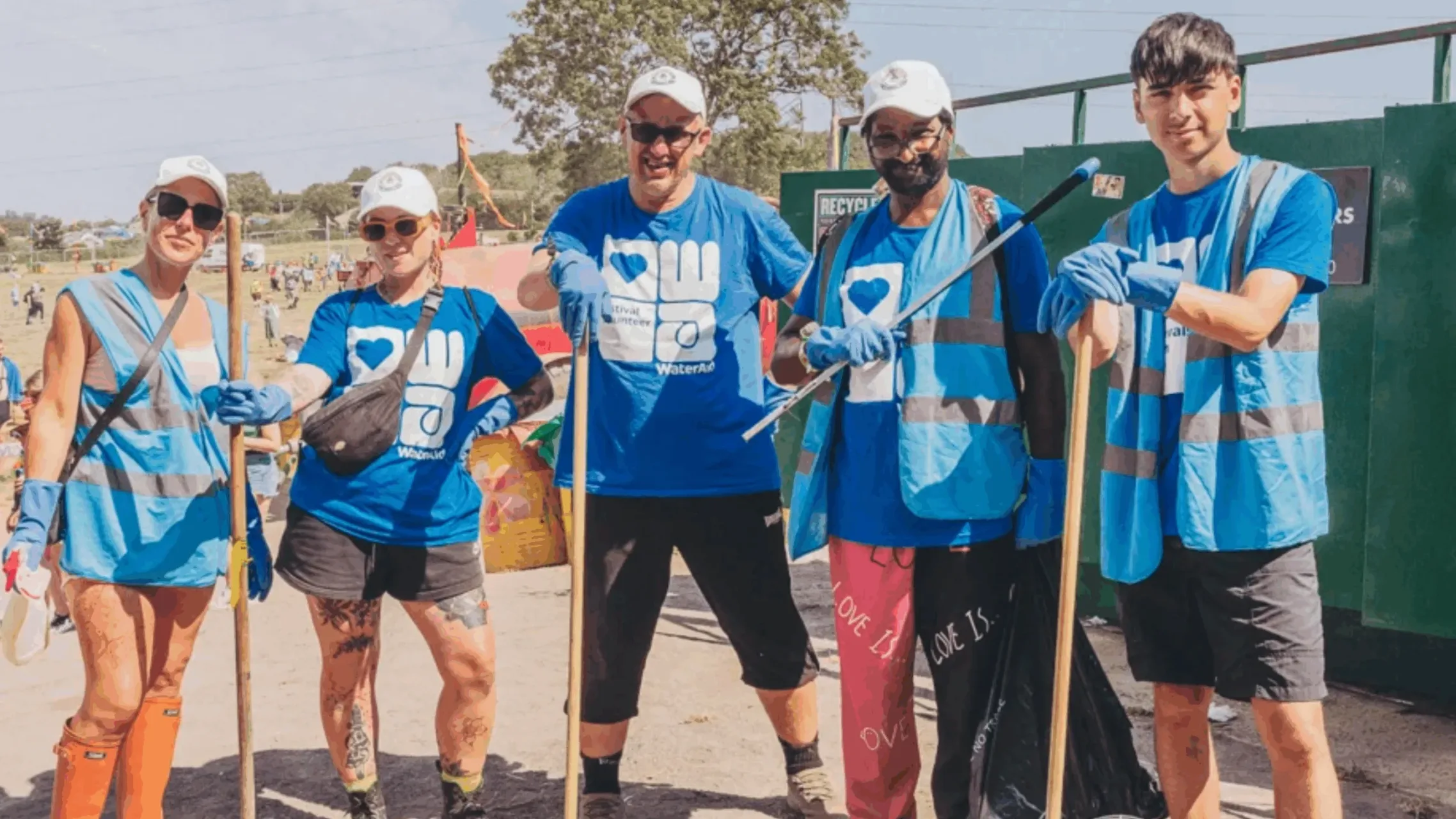
WaterAid: turning volunteer deposits into donations
WaterAid raised over £20,000 in 2024 by letting festival volunteers donate their deposits back, collected and tracked through Rosterfy’s Stripe integration.[6]
Around 700 volunteers a year support WaterAid at UK festivals such as Glastonbury and Shambala, running water, sanitation and hygiene services and talking to festival-goers about the cause. Volunteers pay a deposit through their Rosterfy portal, each deposit is attributed to the individual volunteer, and volunteers can choose to give all or part of it back to WaterAid.[6]
- 96% of volunteers say they feel they belong at WaterAid.[6]
- 94% say the application process is easy.[6]
- 60% have volunteered with WaterAid before.[6]
Why it matters: the fundraising moment is built into the volunteer journey, not bolted on afterwards, and every pound is traceable to a person.
Source 6: Rosterfy, WaterAid customer story, updated March 2026.
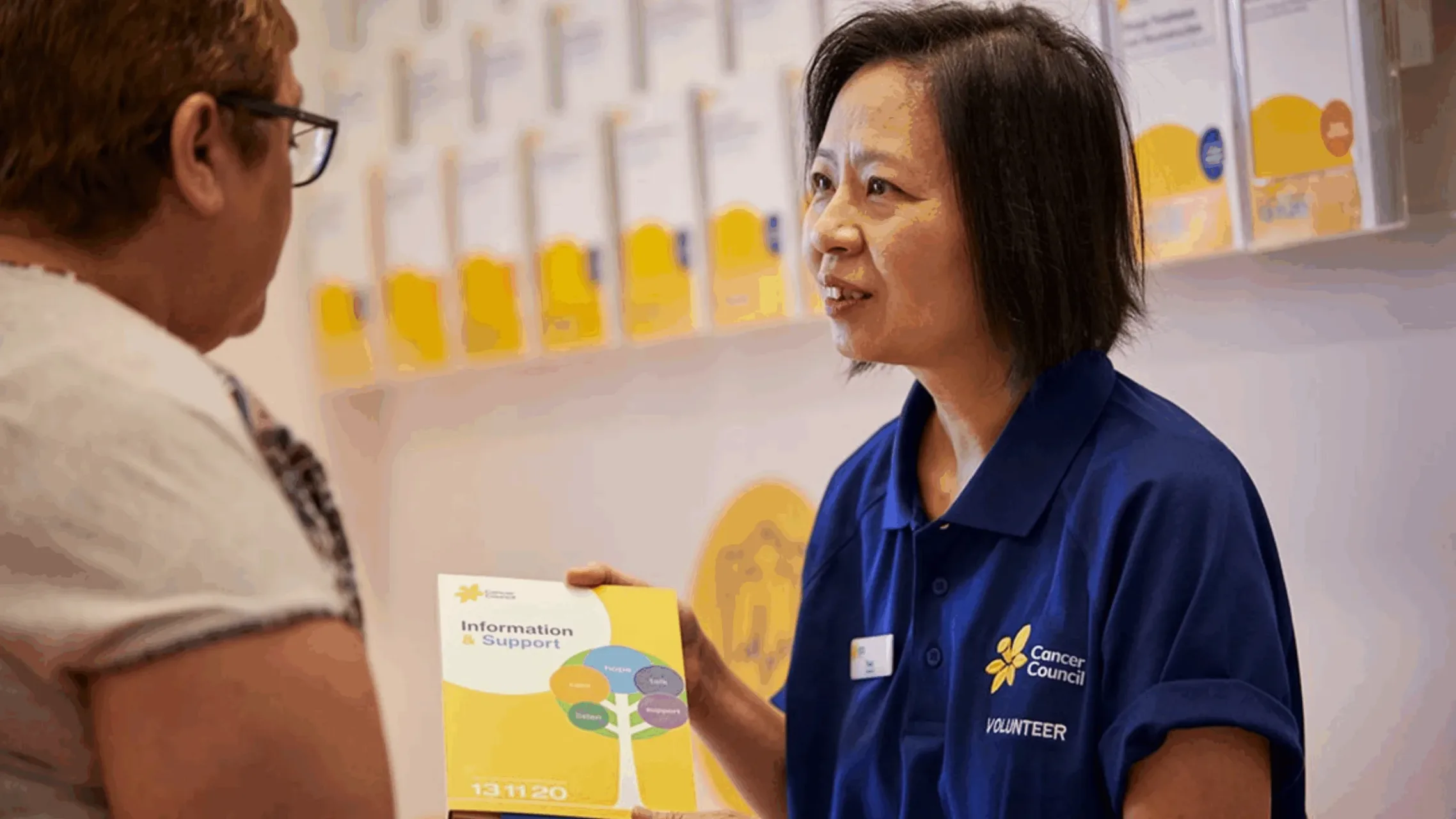
Cancer Council Victoria: freeing staff to focus on fundraising
Cancer Council Victoria rosters 1,800 volunteers across 250 sites for Daffodil Day, its flagship fundraiser, and cut the team needed to deliver it from six people to four after moving off spreadsheets.[7]
Automated scheduling, training and messaging replaced manual rostering, so staff time moved from building rosters to running events and fundraising. Daffodil Day 2018, the first year on Rosterfy, delivered record fundraising.[7]
“Rosterfy has changed the face of how we run Daffodil Day.” Jacinta Webster, Volunteer and Fundraising Manager, Cancer Council Victoria
Source 7: Rosterfy, Cancer Council Victoria customer story.

Tour de Tony: volunteers raising $60,000 for PCFA
A community cycling event run entirely by volunteers raised more than $60,000 for Prostate Cancer Foundation of Australia (PCFA) in 2023.
Rosterfy co-founder Shannan Gove lost his father to prostate cancer in 2023. With friends, he created Tour de Tony, a one-day ride where participants challenged themselves to cover as much distance as they could, to raise funds and awareness for early detection. It became one of PCFA’s biggest fundraising drives that year. About 1 in 5 Australian men will be diagnosed with prostate cancer by age 85.[5]
“We’re tremendously grateful for your efforts and in awe of what you’ve achieved.” Anne Savage, CEO, Prostate Cancer Foundation of Australia
Source 5: Cancer Australia, prostate cancer statistics, 2025 estimates; Prostate Cancer Foundation of Australia, key statistics, August 2024.

World Vision: volunteers as a gateway to new donors
World Vision’s Vision Generation Program helped grow 40 Hour Famine income by 43% in one year and recruit around 20,000 new regular monthly donors in a year.
Carl Young developed the program at World Vision with volunteer school captains and young church members committed to fighting poverty. They opened doors to new schools and church communities without costly cold marketing. As they matured, many became face-to-face advocates for child sponsorship, and many became sponsors themselves.
Peter MacCallum Cancer Centre: a $1 million gift that began with volunteering
The first $1 million gift to a Peter Mac capital campaign was heavily influenced by the donor family’s regular volunteering, according to Carl Young.
The family wanted to help cancer patients and support Peter Mac’s future strategy. Carl notes that many later significant gifts were also influenced by volunteer committees and individuals who opened new pathways and connections.
Where should your charity start?
Start where your structure is. Large, multi-site charities need governance and integrated data first, because volunteer and fundraising teams are separate and IT will review any new data flow. Smaller charities can start with a consent field and a shared calendar, then connect systems once the volunteer segment proves its value.
Large, multi-site charities (500+ volunteers, separate volunteer and fundraising teams)
- Set up a joint volunteer and fundraising working group with an executive sponsor and shared targets.
- Integrate the volunteer management system with the fundraising CRM. Agree record-matching rules and consent mapping, and bring IT in early on integration architecture and data residency.
- Route segments deliberately: long-serving volunteers aged 55 and over to the gift-in-will team, event volunteers to peer-to-peer campaigns.
- Report volunteer-driven income to the board alongside volunteer hours and retention.
Mid-sized charities (one team, or a few people covering both functions)
- Add fundraising consent to volunteer registration and agree a shared communications calendar this quarter.
- Pick one segment to test, such as volunteers at your flagship fundraising event, and track their donor rate and average gift.
- Connect systems once the test shows results, starting with the single integration that removes the most double entry.
Conclusion
Volunteers already give time, money and influence. What most charities lack is the shared planning and connected data to see it. When volunteer and fundraising teams plan together, ask for consent, connect their systems and credit volunteers for what they raise, volunteers become measurable partners in financial sustainability, not just in service delivery.
Frequently Asked Questions
Yes. In Australia’s largest study of giving, people who volunteered and donated gave an average of $1,017 a year, nearly double the $537 given by donors who did not volunteer.
About 9.5 million Australians, or 42.8% of people aged 15 and over, volunteered formally or informally in 2025, according to the ABS General Social Survey. Around 5 million volunteered through an organisation.
Long-serving volunteers have a deep, personal connection to the cause, and many are at the age when people write or update their wills. Only about 6.5% of Australian wills include a charitable gift, so there is significant room to grow.
Plan jointly each year, ask for fundraising consent when volunteers register, share one communications calendar, connect volunteer and fundraising systems, and recognise volunteers for the money they help raise.
Yes. Rosterfy integrates with CRMs including Blackbaud, so volunteer records sync to the fundraising database without double entry, and volunteer-driven income can be tracked and soft-credited.
Track volunteers as a segment in your fundraising CRM and report on volunteer donor rate, average volunteer gift, peer-to-peer income raised by volunteers, gift-in-will pledges from volunteers and soft-credited income.
Take the full guide home with you
Download the PDF to share with your leadership team or board.